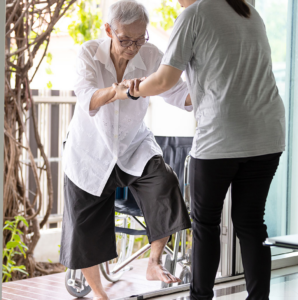
For many older adults, there comes a time when living completely independently becomes more difficult, but full-time care isn’t necessary yet.
This is often one of the most confusing stages for families.
You may notice that Mom is forgetting her medications. Dad has fallen twice but insists he is fine. A parent is still driving, but you’re beginning to question whether they should be. Meals aren’t prepared regularly. The house isn’t being maintained the way it once was. Or perhaps everything seems mostly okay, but you have an uneasy feeling that something is beginning to change.
The answer does not always have to be a caregiver or a move to assisted living.
West Coast Senior Solutions helps families identify practical ways to increase safety, supervision, and support while preserving as much independence as reasonably possible.
Finding the Right Level of Support
There is an enormous space between living completely independently and needing continuous care.
Unfortunately, families often don’t know what resources exist within that space.
Depending on the individual’s needs, solutions may include medication management systems, emergency response or fall-detection devices, home monitoring technology, transportation assistance, meal services, companion visits, scheduled check-ins, home modifications, mobility equipment, assistance with appointments, or limited in-home support.
Sometimes several small interventions can make a significant difference.
Our role is to identify where the risks are, determine what support may be appropriate, and help families understand the available options.
Is the Home Still Safe?
A home that worked perfectly well for someone at 65 may present very different challenges at 80 or 85.
Stairs, bathrooms, poor lighting, rugs, difficult entrances, medication organization, kitchen safety, mobility limitations, and even where frequently used items are stored can become potential concerns as physical or cognitive abilities change.
West Coast Senior Solutions can help families look at the living environment with a fresh perspective and identify areas that may warrant modification, additional support, or evaluation by an appropriate professional.
The goal isn’t to eliminate every possible risk.
The goal is to identify reasonable changes that can improve safety without unnecessarily taking away independence.
Using Technology to Extend Independence
Technology has created options for older adults that many families simply don’t know exist.
Depending on the situation, technology may help with medication reminders, emergency response, fall detection, communication, home security, location awareness, appointment reminders, and other aspects of daily living.
Technology cannot replace human care when human care is truly needed. But when used appropriately, it can sometimes provide an additional layer of safety and reassurance and may help an older adult remain independent longer.
West Coast Senior Solutions can help families explore whether these types of solutions are appropriate and how they might fit into a broader care plan.
When Someone Resists Help
Sometimes identifying the solution is easier than getting a loved one to accept it.
“I don’t need help.”
“I’ve lived here for 40 years and I’m not leaving.”
“There’s nothing wrong with my driving.”
“I can take care of myself.”
These conversations can quickly become a source of conflict between older adults and their families.
West Coast Senior Solutions helps families approach these situations thoughtfully. Rather than immediately removing independence or introducing more care than someone needs, we look for ways to address the greatest concerns first and gradually introduce appropriate support when possible.
Preserving independence and protecting safety do not always have to be opposing goals.
When Is More Care Necessary?
Aging in place is not always the safest or most realistic long-term solution.
As physical abilities, judgment, memory, or medical needs change, there may come a point when technology, occasional supervision, or limited assistance is no longer enough.
West Coast Senior Solutions can help families recognize those changes and reassess the plan.
That may mean increasing assistance in the home, bringing in professional caregivers, exploring assisted living or memory care, involving additional healthcare professionals, or considering other options based on the individual’s circumstances.
The goal is not to keep someone at home at all costs. The goal is to help them remain as safe, independent, and supported as possible for as long as it is appropriate.
Not Sure If Your Loved One Needs Care Yet?
You don’t have to wait until there is a crisis to find out.
West Coast Senior Solutions can help you evaluate what’s happening now, identify potential concerns, and explore practical solutions that may help your loved one remain safely independent.
Sometimes the right solution isn’t more care. It’s the right support.